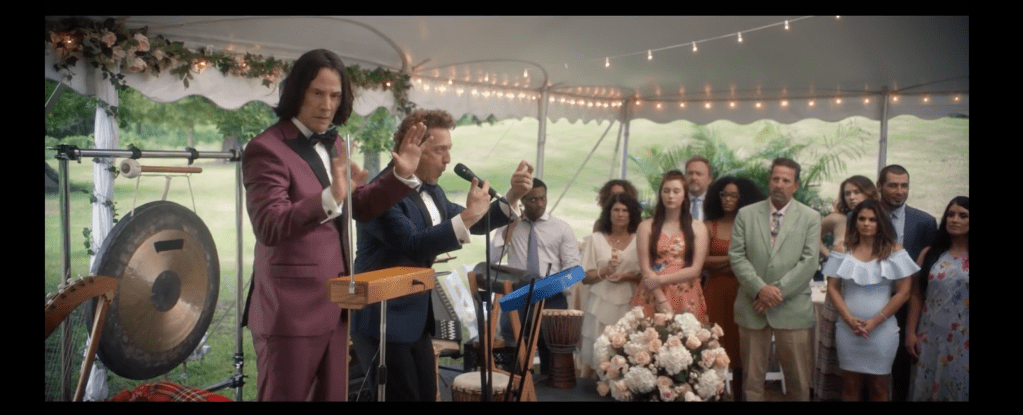
The Californian surfer/metalhead/stoner dude has a kind of intrinsic comic appeal, but has been deployed to better effect elsewhere—in virtually in every instance, actually—from Don’t Tell Mom the Babysitter’s Dead (1991) to Wayne’s World (1992) to Clueless (1995). Keanu Reeves is a pretty looking lightweight—kind of a tall Tom Cruise with no edge—but it’s expecting a lot of anyone in his 50s to convince as such a character, and in this he looks more like a waxwork than a real person, even if he has been dealt a dud hand, dialogue wise.
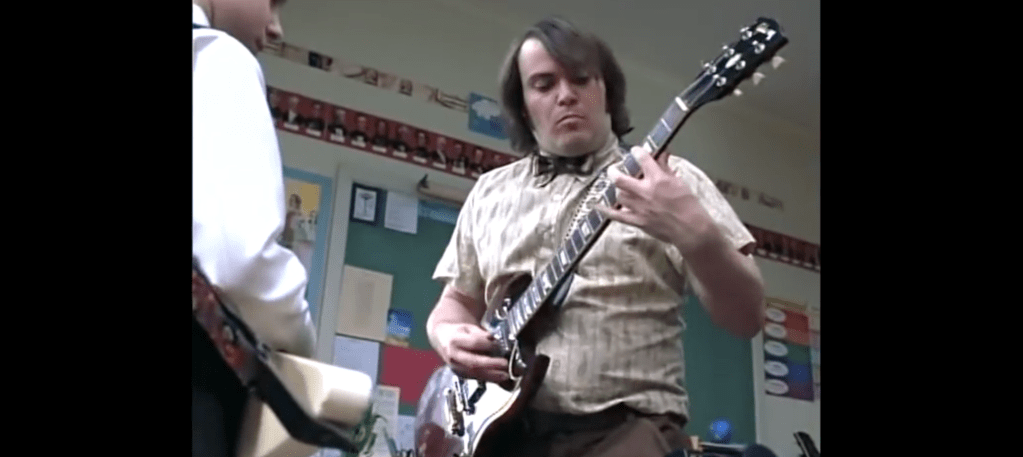
Rock ‘n’ roll as a medium to solve problems, or save the world, is a nice conceit—but it was done far better in School of Rock (2003)—a work of genius that uses Jack Black’s talents to optimal effect, and has the sense to include genuinely interesting music—whereas, bizarrely, Bill and Ted 3 features no songs at all, let alone original ones. Even more problematic, the creators forgot to include jokes—and, while the best moments may trigger the occasionally smirk, the writing seems churned-out, and there are no laughs as such—which is a bit of a bummer for a comedy.
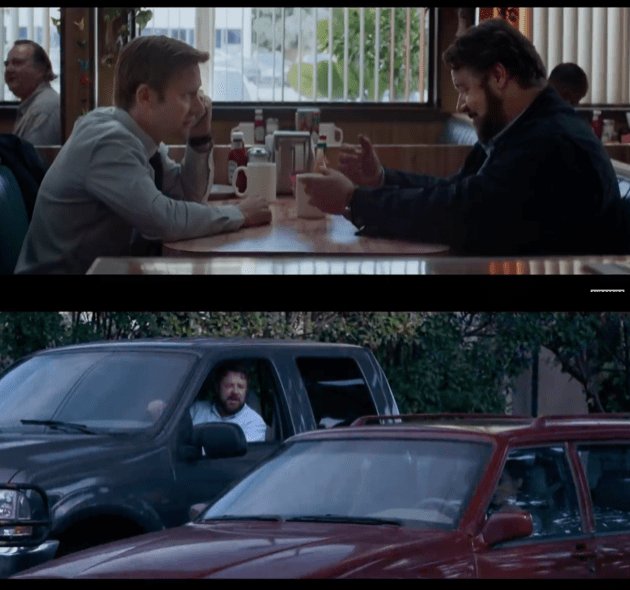
I’m sure we’ve all had occasion to engage in hand-to-hand combat on the highway, or resort to using our car as a weapon. But the writer of Unhinged has spent too much time surfing QuorTube, and concluded that road rage and serial killing are the same phenomenon.
The obvious calculation behind this production is that hybridizing the plot of [TV movie] Duel (1971) with elements of Psycho (1960), and intermixing pop psychology notions about road rage and texting at the wheel—and various other societal ills—is going to tap into the zeitgeist and strike box office gold, somewhat like the wildly overrated Fight Club (1999) apparently did for repressed masculinity.
But Fight Club seems like a work of genius compared with this garbage, and even Russell Crowe—as a kind of Stuntman Mike without style—cannot save it. It’s a straight action-suspense effort in which the screenwriter deploys at best cursory knowledge of how human animals behave in real-world situations.
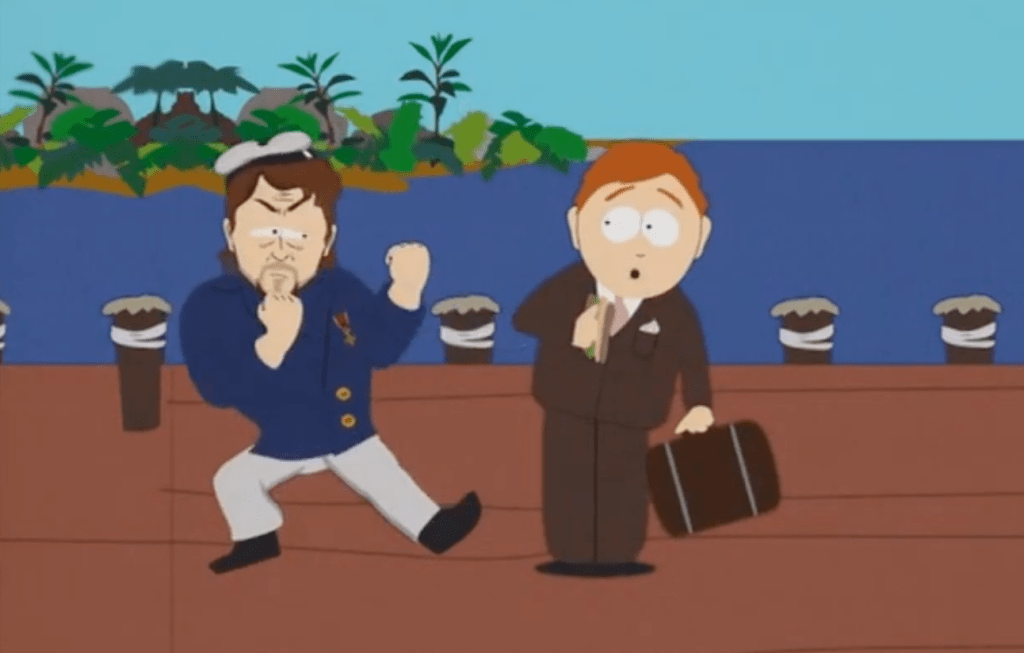
A glance at IMDb indicates that I have seen 10% of Crowe’s film output. He was brilliant in LA Confidential (1997), equally so playing introverted but relentless types in The Insider (1999) and American Gangster (2007), and perhaps also in any of the myriad ones I haven’t seen. He has amazing range. Maybe he viewed this project as a way to counter South Park‘s on-the-money critique of his personality flaws …but doing so by sending himself up by way of an artless thriller seems kind of weird.
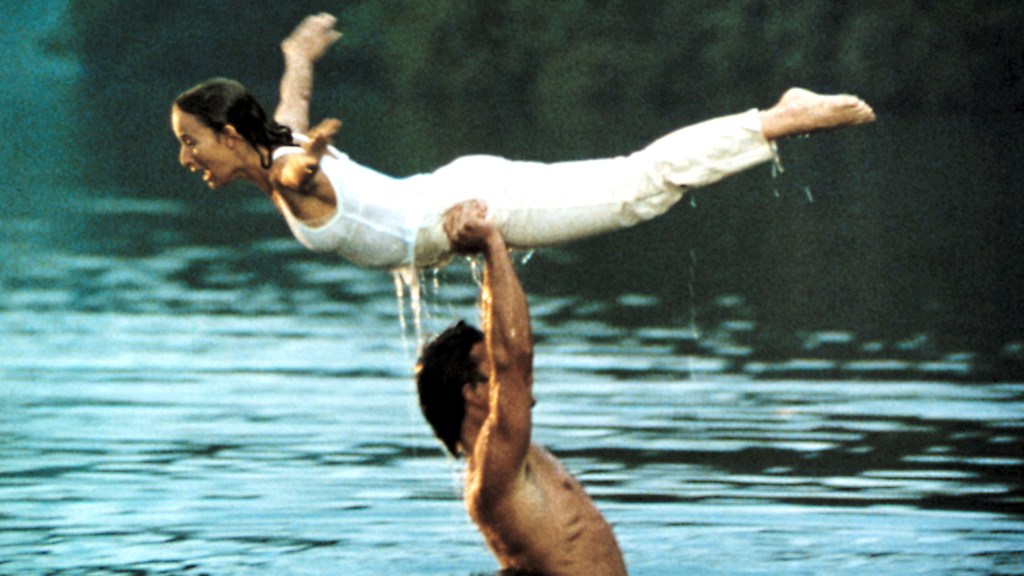
Somehow, I’d never seen this right through until tonight—but I’m glad I did, as it is a genuinely superb film. Sex sells—and there is nothing sexier to most men than women who can dance, dancing. But Dirty Dancing goes beyond that by conjuring many moments of emotional truth anyone can relate to—and it’s funny, which I would never have gotten from anything I’ve ever read or heard anyone say about it.
Some time ago, when I looked into it, I was astonished to learn that Jennifer Grey is the daughter of Joel Grey [riveting as the flamboyant Master of Ceremonies in Cabaret, 1972]. Her face, as she looks at Patrick Swayze, says everything that can be said about longing and frustration. Unfortunately, she didn’t much like her face, and, years later, did this to it:
Strangely, the one piece of casting that didn’t work for me was Swayze himself: it goes without saying his dancing is amazing, but he just cannot act convincingly when not doing the mambo.
Howard Hawks—director of To Have and Have Not (1944), The Big Sleep (1946) and Rio Bravo (1959), among many other iconic films—preferred to describe what he made as “entertainment,” rather than Art—and, of course, it was both—and in doing so recognized that entertainment is the art that reaches an audience. Which Dirty Dancing certainly did—and without compromising the Art.
“Great artists don’t borrow—they steal.” Picasso said that. And he was right—but he wasn’t as great as Quentin Tarantino. At least, not as a filmmaker.
This re-release, which marks my first trip to a movie theater since the abomination that was The Irishman (2019), offers a way not to hate the whole business of trying to entertain oneself. In it, Tarantino channels Godard, Kubrick, Scorsese—Boorman, even—and everyone who came before who contributed to the development of film technique, all the way back to Eisenstein.
He takes these influences, and countless others, and, like all geniuses, makes something new, adding stuff no one thought of before: like Steven Wright’s hilariously languid disc jockey narrative inserts, movie-obsessed hardened criminals-within-the-movie talking about movies, and Harry Nilsson, singing offbeat, unclassifiable pop over the closing credits.
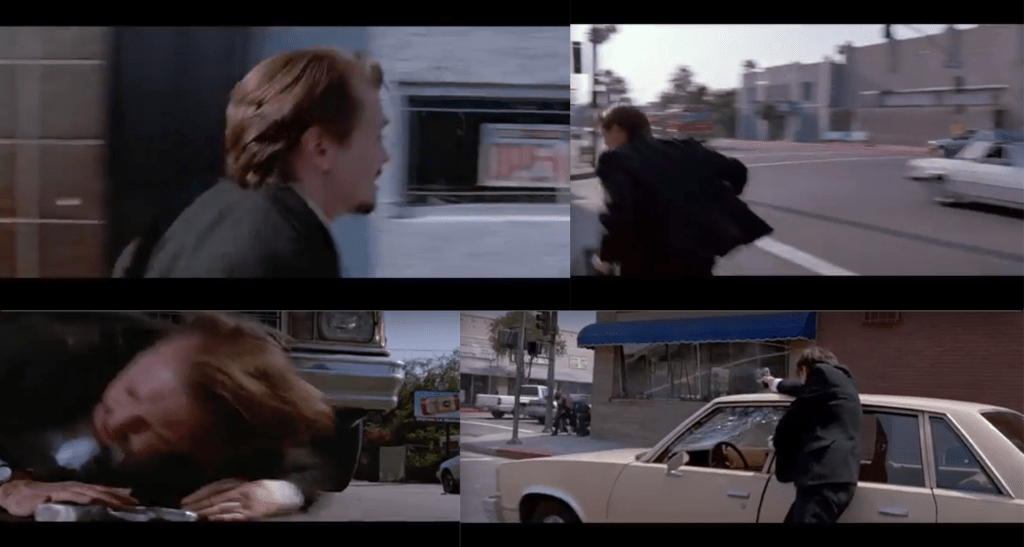
Yet, he is way more than a director’s director, or writer’s writer: he is a moviegoer’s director, and an actor’s director. He loves actors, and is the brilliantly original, if indulgent, casting director of his own movies. The ensemble he brings together here is electrifying. Chris Penn is genuinely terrifying; Lawrence Tierney and Ed Bunker look every bit the tough guys they actually are; Steve Buscemi’s uniquely gaunt, pallid appearance and highly strung demeanor are mesmerizing; and Harvey Keitel’s rough-hewn, intense presence serves as a focal point for the whole thing. But, when Keitel kicks a recumbent Buscemi, he does so like an Irish dancer warming up for a show; and Tim Roth’s performance is almost unvaryingly hysterical—implausibly so—with the exception of the imagined drug-dealer-confronted-by-cops-and-their-German Shepherd scene, in which he is singularly believable, and where Tarantino’s use of montage and slow motion creates moments of anticipatory fear, and relief, never bettered on film. Michael Madsen—whose looks recall Elvis Presley and presence John Garfield—though, steals the show as Mr Blond—and not only for his mesmerizing Stuck in the Middle with You cop-torture dance routine.
In Reservoir Dogs, there is greater urgency to the narrative than anything Tarantino has subsequently achieved; it is an object lesson in the principle of Less Is More, and an interesting contrast to the shapeless monstrosity that is Oliver Stone’s Natural Born Killers (1994), or Tony Scott’s slick, Top Gun-ish True Romance (1993)—both made from early Tarantino scripts. His lack of interest in women, except as proxy men, is a pervasive flaw—here, they scarcely appear, except to be shot dead—but, then again, nobody’s perfect.
Weirdly, for an actor, Tarantino is more charismatic in real life than on-screen, and an interview with him is usually at least as compelling as any random excerpt from one of his films. He can talk about movies, and his own process, as well as Hitchcock or Scorsese— and come acrosss as more likely to strike up a conversation with you in the queue for this movie—the one he directed.
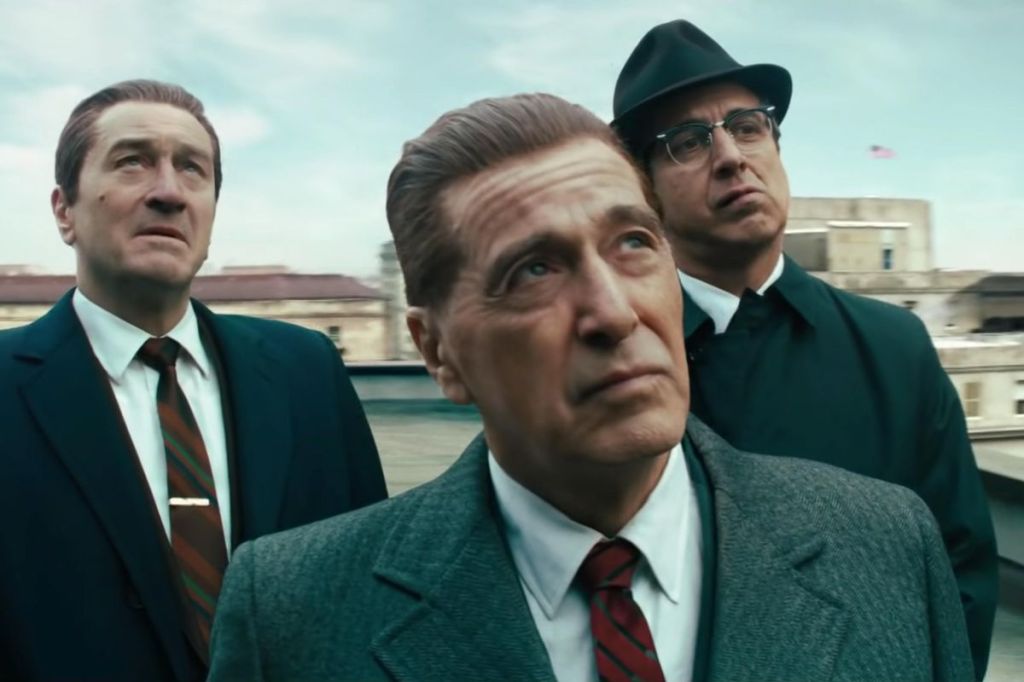
I’m saddened to report, Mr Scorsese, a misfire: The Irishman misses in just about every way it is possible to imagine—and, more importantly, commits the unforgivable sin of being dull. With its CGI de-aging of a decidedly septuagenarian cast, it looks like the Grand Theft Auto version of Goodfellas—of some interest as a technical exercise, but far from the explosive tour de force for which one would have hoped.
Unfortunately, the de-aged Robert De Niro, and co-stars, look nothing like they did at any point in the past—and they forgot to de-age their physiques, or movements. In a scene in which he beats a victim on the sidewalk, De Niro appears every one of his 76 years, and is laughably unconvincing. I can’t imagine Stella Adler would have been impressed.
Lacking the stunning visual flair or narrative urgency of Goodfellas, or fascinating use of language of Casino—which would have required a Nicholas Pileggi script—The Irishman sags under the weight of its own vanity. Everything on show here has been displayed many times before—usually on The Sopranos—and Scorsese falls back on referencing his own back catalogue, including matching shots from Taxi Driver that were striking in their originality …in 1976. While De Niro and Al Pacino phone in their performances, Joe Pesci wisely elects to play against type as a reserved, unshowy boss, and Harvey Keitel and Ray Romano punch occasional holes in the drab tableaux. Scorsese would have been better off casting actors 30 or 40 years younger, and leaving these shadows of their 1970s heyday to play the aging greaseballs directing things from backrooms. This is not a veiled comedy of manners like Raging Bull or Goodfellas—and, as the central characters give us nothing to empathize with, we care nothing about their fates.
If one wishes to reflect on what acting talent can do, it is worth recalling that, when Marlon Brando played Vito Corleone in The Godfather, he was 46—but surely no one in his right mind would wish to see him play 30+ years younger than himself. I imagine that in the near future technology will advance to a point where entire performances will be interpolated from ones previously committed to celluloid—and then I’m going to stop going to the movies altogether.
Aiming for an entirely naturalistic account of a DC Comics character with such a flamboyantly burlesque aspect is a bold move, but a weirdly mirthless and tasteless quality pervades Joker, wherein the titular antihero’s proclivity for incongruous laughter is explained by a neurological condition, and the only scene played for laughs does so at the expense of a dwarf. Although I’ve never previously felt the absence of Batman in a movie, here it is glaring, as there is no object for the protagonist’s angst other than the abstract hate symbol of Corporate America (briefly embodied by some boorish WASP stockbrokers)—and, as drama, it defeats its own purpose.
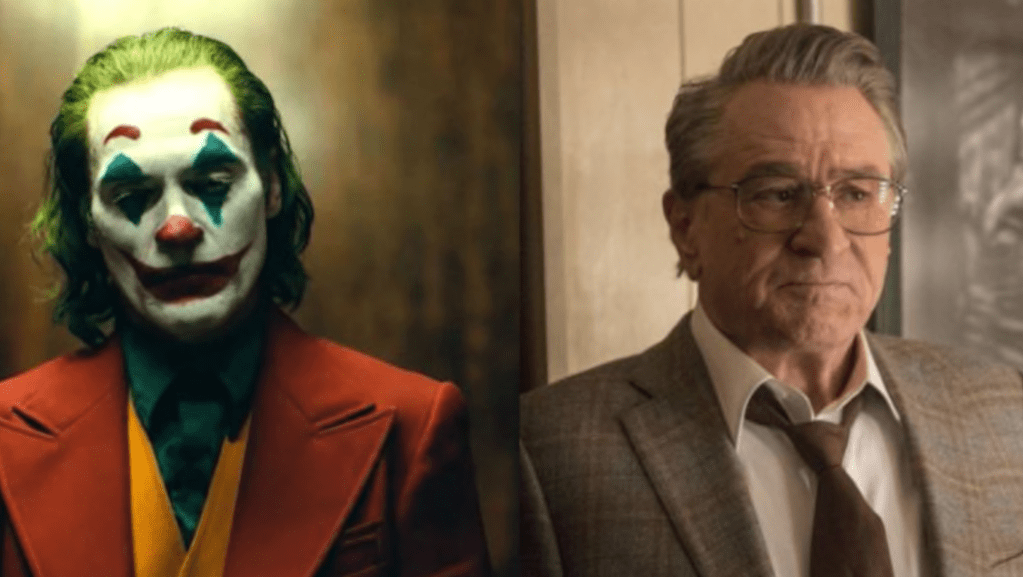
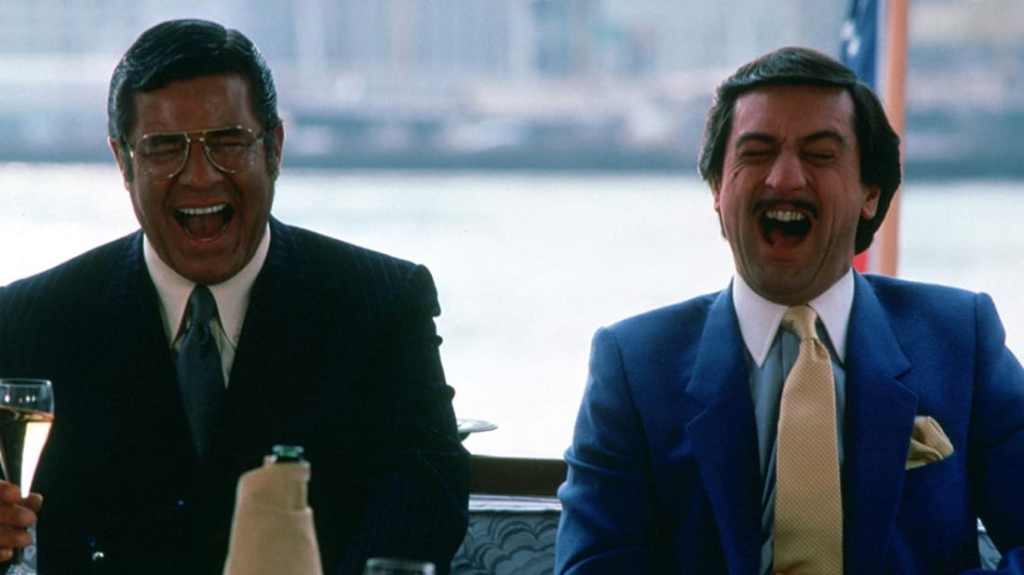
Perhaps this flaw might have been offset by the presence of an actor more charismatic than Joaquin Phoenix—his interpretation has nothing on Jack Nicholson’s, or Cesar Romero’s—or a less vainglorious piece of casting than that of Robert De Niro, whose iconic performances in The King of Comedy (1982) and Taxi Driver (1976) are heavily referenced, and for no obvious entertainment based reason. Even The Deer Hunter (1978) gets a nod—by way of a TV ad for the beer, Rolling Rock, it made famous.
Over the years I’ve had two girlfriends who thought Robert De Niro’s name was actually Danny DeVito—and I totally get that his outstanding skills as a character actor are not everyone’s cup of tea. Moreover, for all his brilliance at embodying determination, courage, and macho values, he has never convinced as someone who could provoke a smile that was other than nervous. When matched against genuinely funny actors like Charles Grodin or Bill Murray, De Niro has been acted out of the park—and here he only deepens the depressing tone. Beyond a certain age, all actors lose their screen presence, if it has depended to any degree on good looks—even including Brando, by the time of The Score (2001)—and De Niro, here looking like your embarrassing, overweight uncle, is no exception.
The cinematography, and production values generally, are superlative, as you would expect in a Hollywood production—even one with a below-average budget of $55 million—but this cannot save it from having no plot. This Joker’s various social and mental state issues—which also include literacy problems—combine with the screenwriters’ thinly-veiled critique of healthcare provision in NYC-Gotham City to suggest that they are in fact frustrated social workers, and the whole thing is about as entertaining as a three-month-long elective in the outpatient clinic of your local hospital. As Sam Goldwyn sagely remarked, if you have a message, go to Western Union.
The dialogue in Once Upon a Time …in Hollywood, Quentin Tarantino’s blackly comic reimagining of the 1969 Tate-LaBianca murders, and their Hollywood backdrop, may not fire with the same ballistic precision as Pulp Fiction (1994), or Reservoir Dogs (1992), but he plays to some of his other strengths, including sure command of montage, deceptively attractive visual sense, and deep appreciation of popular culture at its trashiest.
Sharon Tate was an amazingly beautiful and femininely attractive actress, and the willowy Margot Robbie, playing her here, while striking looking and extremely watchable, is less so. There is no mistaking one for the other. That Tarantino intercuts between them — Tate in a scene with Nancy Kwan from The Wrecking Crew (1968), and Robbie as Tate in a Hollywood movie theater, watching herself—is one of many arch postmodern games he plays with the audience.
Leonardo DiCaprio displays much greater range than I’ve previously noticed, and Brad Pitt’s easy charm, and deceptively honed technique, is this time coupled with demonstrations that he properly knows how to punch — unlike Al Pacino, who, while still commanding considerable screen presence, seems more like Kevin Spacey doing an Al Pacino impression on the Late Late Show. Other key elements include a chilling, plausible portrayal of Squeaky Fromme by Dakota Fanning, Timothy Olyphant in a turn apparently inspired by his role in Justified, and a funny, if insulting, and objectively ridiculous (in terms of his effectiveness as a fighter), depiction of Bruce Lee — as well as an astonishing performance from 10-year-old actress Julia Butters.
On the downside, Tarantino regular Michael Madsen reiterates his unvarying menacing schtick, all slow-drawl and roughhewn eyebrow furrowing; Kurt Russell contributes a superfluous revision of his Stuntman Mike turn in Death Proof (2007); and Tarantino’s female characters again speak in implausibly macho male idioms.
While his tongue remains firmly in his cheek throughout, the climactic violence never manages to set up the moments of genuine hilarity that are a Tarantino hallmark, and which count among his original contributions to cinema — but perhaps that’s just as well, given that the reality was five terrible, senseless murders, committed by a band of psychopaths some of whom are still alive. Members of the Manson Family were not really savaged by a righteous American Pit Bull Terrier, but it is nice to imagine that they were.
Along with Martin Scorsese, Tarantino has kept Hollywood alive as a going concern, artistically speaking, for nearly three decades, not quite alone, but with remarkably little support. Once Upon a Time …in Hollywood, as a piece of cinema, ranks (in my opinion) below Reservoir Dogs, but above Jackie Brown (1997), Kill Bill: Volume 1 (2003) and Kill Bill: Volume 2 (2004) — and is, in any case, a devastatingly entertaining and gripping experience, and long-awaited return to form that may, perhaps, engender sufficient demand for more so as to postpone his self-announced future retirement from filmmaking.
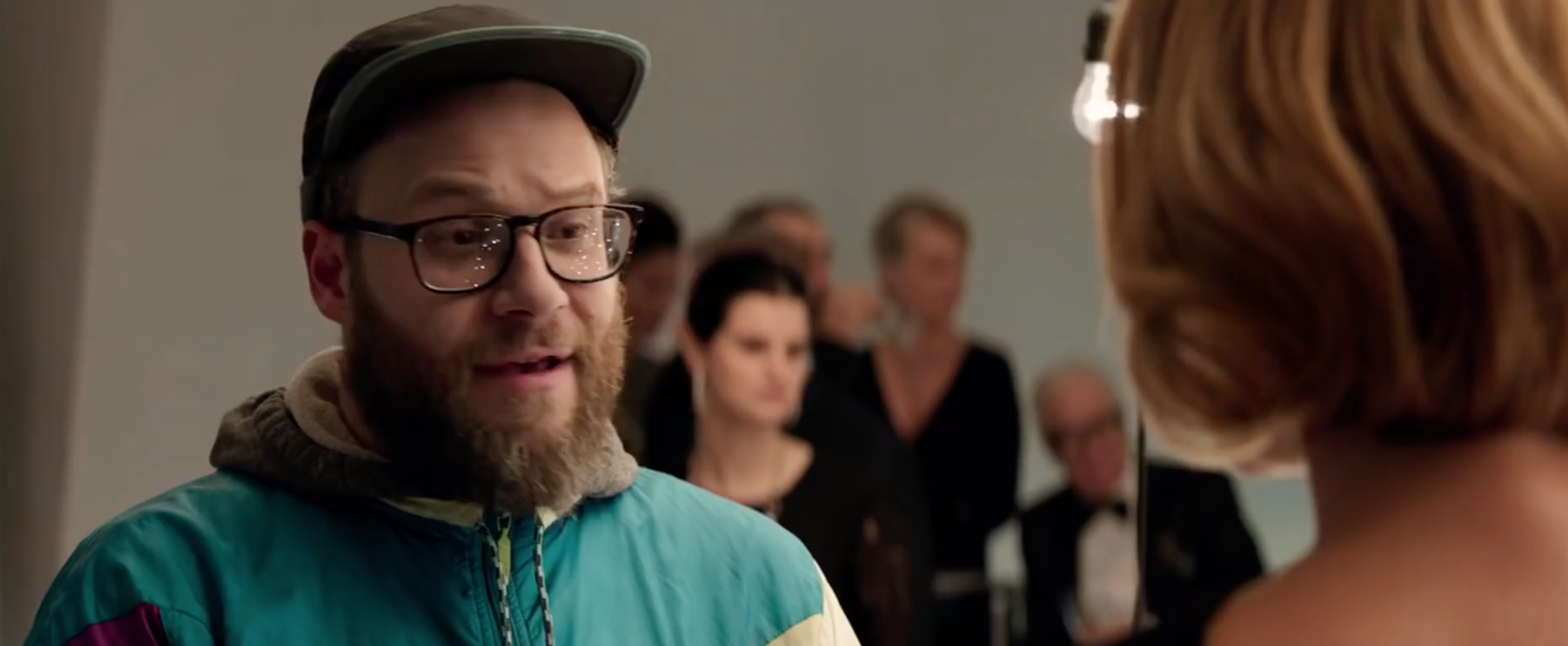
Long Shot is about as formulaic as comedies get (fish out of water/mismatched romance, in this case). While it has a smattering of funny lines, Seth Rogen’s one-note, over-the-top performance as a loser-stoner journalist hired to write speeches for an aspiring presidential candidate rapidly grates, whilst Charlize Theron possesses no identifiable screen presence, let alone charisma — and has a kind of austere beauty that ought to be confined to cosmetic ads. The scene in which an aurora borealis inexplicably appears drags proceedings down to the level of pure schmalz. Lisa Kudrow — sadly underused generally, and onscreen here for a total of about five minutes — is far the funniest thing in it. Clearly, she should have been cast in the Theron role, had the makers in fact intended it for the purposes of entertainment.
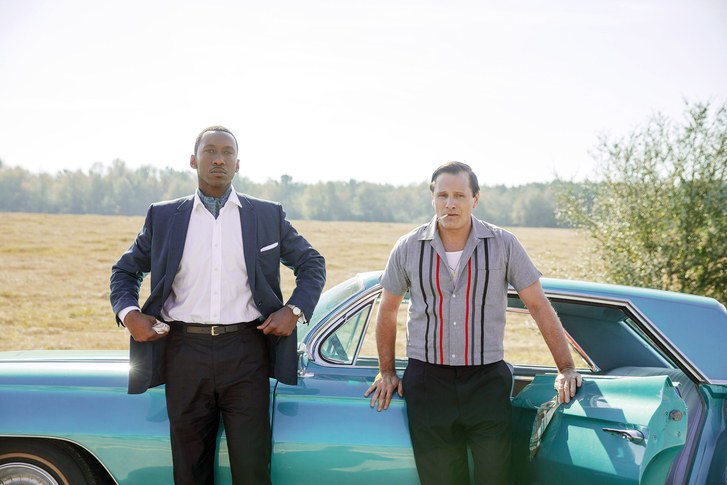
My reaction to the first few minutes of this Peter Farrelly-directed alleged comedy was a degree of relief that it was not in the same gross-out vein as Farrelly Brothers hits Dumb and Dumber and There’s Something About Mary – but that emotion quickly gave way to frustration that the humor was evidently so restrained as to be virtually non-existent. Given that their one truly brilliant comedy – Kingpin – was from a script not written by them, one wonders what either is doing trying to make movies based on his own depressingly unfunny ideas. This movie proves the folly of that ambition. The scenario is mismatched traveling companions – Viggo Mortensen as a rough-edged, blue-collar Italian-American chauffeur, and Mahershala Ali as a cultivated, if uptight, African-American pianist – on a tour of the Deep South in the 1960s. For all I know, it may have some basis in fact, as the promotional blurb seems to suggest – the problem is, it doesn’t seem plausible, despite the considerable effort lavished on setting up Mortensen’s background, replete with characters straight out of Goodfellas and its small-screen wannabe version The Sopranos.
Whilst this clash of personalities and cultures is not, to my mind, intrinsically funny, one wouldn’t have cared if the script had the comic sparkle of a Planes, Trains and Automobiles or The Odd Couple – but it does not, and watching it is a chore. Ultimately, the performances are too one-note to be convincing, let alone interesting, and I rapidly tired of both of these tedious, predictable ciphers. The film does look great – lots of sharp suits and cars with tailfins – but this can scarcely rescue it from the more profound problem of its confusion about whether it is trying to be comedy or social commentary, and it’s simply not well written enough to succeed on either count.
“She heard her heart beating in her voice and dared not risk more than the shortest answers.” That sentence, from Colette’s Chéri, published in 1920, could have been written yesterday. Keira Knightley elects to underplay the titular writer, in contrast to Dominic West, as her first husband, who is an exhausting whirlwind of bluster. In fairness, his character is I guess supposed to be like that, but it does get a bit wearing after a while. Although the film is well-made, and immaculately photographed, the makers seem most concerned with highlighting Colette’s sexual interest in women, as though that would explain anything about her abilities as an artist. To be sure, films about writers never really shed any light on the creative process – but this one is just aching to put its political points center stage.



 FATAL VISIONS