If I had to rank Lucinda Williams’s previous studio albums—and I suffer from a weird compulsion to do exactly that—then, depending on mood, I would place them in something like the following order:
On first listening, I would insertGood Souls Better Angelsbelow West andSweet Old World—whose songs are consistently superior, but which suffers from production that has always seemed to me incongruously bright and vapid—a problem corrected, of course, on its 2017 reboot,This Sweet Old World.Incongruously, because the world depicted is anything but sweet—but the ability to report back on lives shattered by disappointment and cruelty, and express the essence of those experiences…
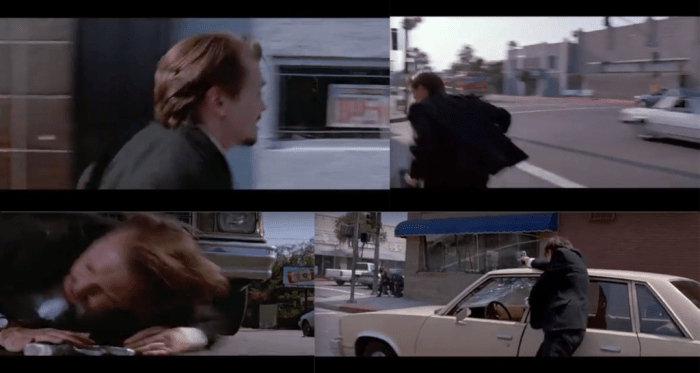
The dialogue in Once Upon a Time …in Hollywood, Quentin Tarantino’s blackly comic reimagining of the 1969 Tate-LaBianca murders, and their Hollywood backdrop, may not fire with the same ballistic precision as Pulp Fiction (1994), or Reservoir Dogs (1992), but he plays to some of his other strengths, including a sure command of montage, deceptively attractive visual sense, and deep appreciation of popular culture at its trashiest.
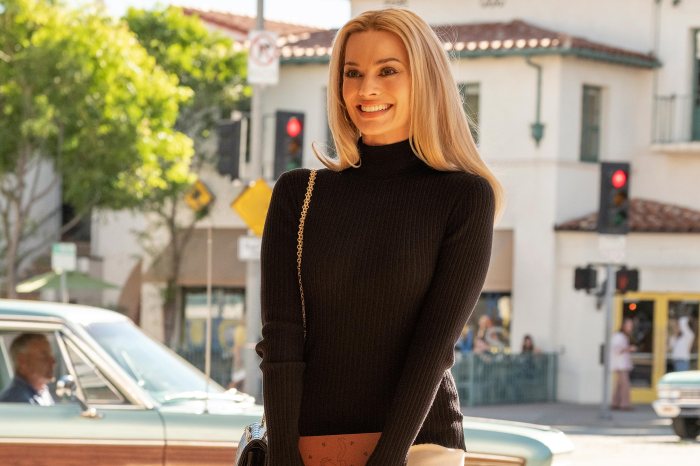
Sharon Tate was an amazingly beautiful and femininely attractive actress, and the willowy Margot Robbie, playing her here, while striking looking and extremely watchable, is less so. There is no mistaking one for the other. That Tarantino intercuts between them — Tate in a scene with Nancy Kwan from The Wrecking Crew (1968), and Robbie as Tate in a Hollywood movie theater, watching herself—is one of many arch postmodern games he plays with the audience.
Leonardo DiCaprio displays much greater range than I’ve…
“Great artists don’t borrow—they steal.” Picasso said that. And he was right—but he wasn’t as great as Quentin Tarantino. At least, not as a filmmaker.
This re-release, which marks my first trip to a movie theater since the abomination that was The Irishman (2019), offers a way not to hate the whole business of trying to entertain oneself. In it, Tarantino channels Godard, Kubrick, Scorsese—Boorman, even—and everyone who came before who contributed to the development of film technique, all the way back to Eisenstein.
He takes these influences, and countless others, and, like all geniuses, makes something new, adding stuff no one thought of before: like Steven Wright’s hilariously languid disc jockey narrative inserts, movie-obsessed hardened criminals-within-the-movie talking about movies, and Harry Nilsson, singing offbeat, unclassifiable pop over the closing credits.
Yet, he is way more than a director’s director, or writer’s writer: he is a moviegoer’s director, and an…
Going to see another Marvel movie makes me feel like a housewife returning to the same drunken pig for yet another beating. This movie—if you can even apply the word in this case and believe it’s really the same type of thing as To Have and Have Not or On the Waterfront—must be among the dullest ever produced.
And produced is the operative work—it looks and feels to be exactly what it is: a composite work of digitalised celluloid Lego with all the lustre of a term paper on why wokeness is just more white privilege. There is not a single line of dialogue that resembles how people actually speak, and the march to diversify is in this instance embodied by some void in the English Stage Acting mode, like they thought reverting to a time before great movie acting was an ace move.
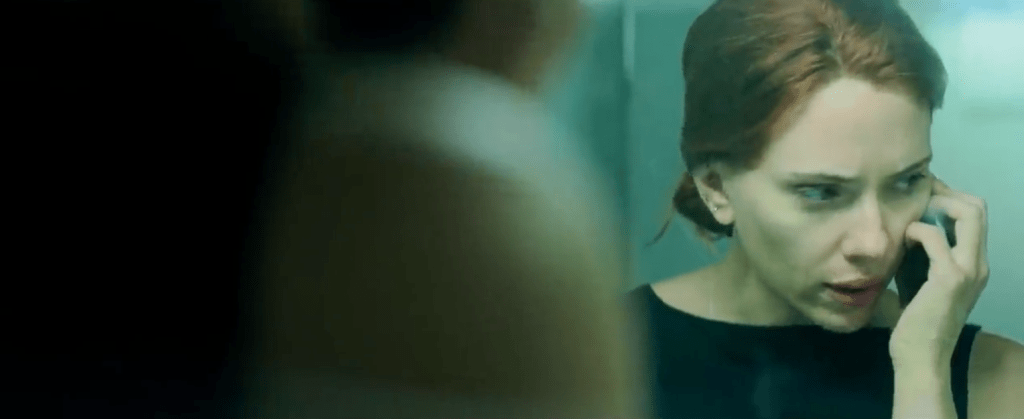
It’s another pay check call for Scarlett Johansson in a career that at this point looks astonishingly complacent, and lucky—even if she evinced a nicely understated, touchingly guileless impression in Ghost World and Lost In Translation, and was one of very few actors resembling a movie star from the Golden Age who could also act. Aside from the hardware of Johansson herself—and she is not shown here to her best advantage in any way, shape, or form, being fully dressed in a leather motorcycle one-piece throughout—the best realised aspect of Avengers #who knows? is futuristic super-planes.
Everything else is spinning kicks and well-executed parries, but without feeling. I am sure I have seen her do very decent-looking fight scenes before—but, here, you might as well be watching gameplay of Mortal Kombat, it’s that unconvincing, if slick.
Which is my point, I think, if I have one: reality is messy so, without light and shade, and things going wrong some of the time, you have no way of relating to what’s onscreen.
I am not sure I can even say anything about the plot—I had literally no bearings for what I was watching other than a vague recollection of seeing Johannson in some previous Avengers-type snooze-a-rama—so we’re not going to talk about it. What I can say is that there there are a lot of Russians—purported Russians, really—one of them being Ray Winstone, who has the decency to do a technically proficient acting job.
If super heroes have super powers, Black Widow’s seem to be advanced level kickboxing, and ability to fire Imperial Storm Trooper Mogadon-overdose laser bolts from her wrists. If she is a spider of some kind, I’m a banana.
So, it may be more productive briefly to review the careers of these two stars—kind of star, in the case of Winstone, if you count starring roles in movies no one saw and character bits in major releases. Let’s rank their respective outputs.
Actually, that would take way too long, so let’s go with my highly edited version.
Scarlett Johannson
The Man Who Wasn’t There (2001) Don’t even recall her being in this but, in the current spirit of grade inflation, let’s give her an A*
Ghost World (2001) A* again
Lost in Translation (2003) A*—not bad, so far
Match Point (2005)—I might have to look at this again, but as I recall one of the few watchable elements in one of many Woody Allen nadirs
The Island (2005)—Uh, I don’t completely remember, but wasn’t this garbage? Let’s say B+, just to be charitable.
The Black Dahlia (2006) A
Vicky Cristina Barcelone (2008) B
Iron Man 2 (2010) You can’t really even see anyone else on-screen when the luminescent Robert Downey, Jr. is in a scene, but probably B+, rising to an A on appeal
Lucy (2014) B+
…And literally everything since has been a stream of crap.
Ray Winstone
Scum (TV movie, 1979) A* before anyone was awarded one
Nil by Mouth (1997) A*
Sexy Beast (2000) A*
Ripley’s Game (2002) A-
The Departed (2006) A
Beowulf (2007) F—if you can call this kind of CGI horseshit acting
King of Thieves (2018) C-
Conclusion
Both are poster people for selling out, but Winstone edges it based on heart.
F9: The Fast Saga (AKA Fast & Furious 9, or just F9) contains no more than a few minutes of verisimilitude—which I suppose is fine if your target audience’s reality is spending 16 hours a day playing Grand Theft Auto: San Andreas and huffing lighter fuel.
So, the art of motion pictures has developed from an initial rudimentary level through innovation and improvisation brought about by successive geniuses like Eisenstein, Hitchcock, Kubrick, Roeg, Scorsese and Tarantino—much like how jazz or blues musicians expanded on what came before, to produce something new and better.
Somewhere along the way, post-Lucas and Spielberg, Hollywood was taken over by dopes in suits who determined that we don’t need story-telling—or reality at any level—and that the way to make movies was to to fill them end-to-end with action sequences so absurd you could not even consider suspending your disbelief, and break it up every thirty minutes or so with scenes of wooden expository dialogue.
The plot of this monstrosity, as far as I can discern one, is a macho intra-familial type thing about redemption and intimidating your first-degree relatives by taking steroids and driving fast in Costa Rica, Bangkok, and Outer Space.
Fast & Furious stalwart Vin Diesel has a certain kind of low-key charisma, but deploys an expression I’ve only ever seen used onscreen by Tom Cruise or, in real life, people recovering from enemas. I imagine it is intended to convey deep emotion. In terms of range, he makes Sylvester Stallone look like Meryl Streep.
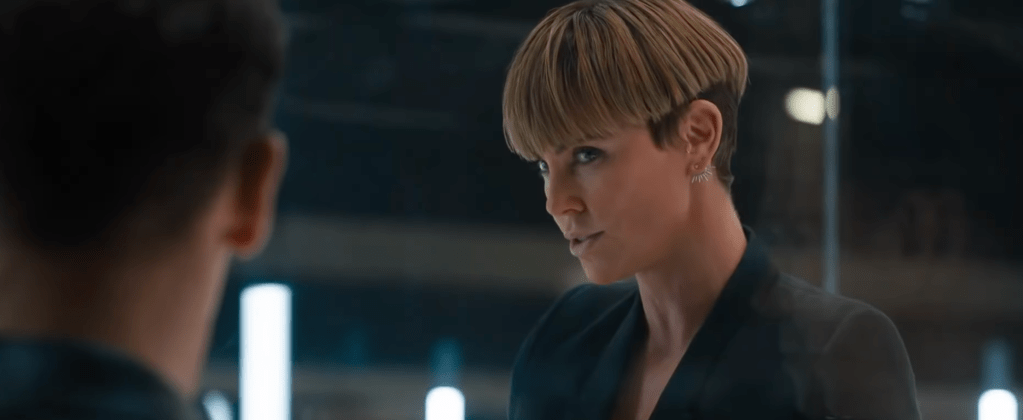
John Cena and Lucas Black are so ugly they would not have been cast in movies made earlier than 1980, except as extras in Hammer Horror flicks—while acting bot Charlize Theron is here too alien, like she based her performance on Michael Fassbender’s in Prometheus, in which they co-starred. Either way, she looks and acts weird. Helen Mirren seems to have based her accent on Dick Van Dyke’s in Mary Poppins, and her performance is the only true embarrassment in her career I am aware of.
The only naturalistically acted scene features Kurt Russell, looking like he is in a completely different film. The actor who emerges with the most credit is Ludacris, who has a comedy pairing with the god-like Tyrese Gibson; but they struggle with the unfunny dialogue and ridiculous scenario. It’s …garbage.
Coppola has previously copped to his motivation for making the Godfather: Part III: a need for cash—specifically, his family’s—which is fair enough, as far as it goes.
In making it, however, he produced the most shocking piece of crap he’d ever made, and ruined a rich seam of filmic gold that began with The Godfather—itself a surprising act of alchemy that turned a superior work of pulp fiction into an exciting and deceptively cerebral movie through sublime and nuanced dialogue, acting, and cinematography.
The reality of the American Mafia—or criminality generally, for that matter—is nothing like the world depicted in The Godfather, which is more like a bunch of corporate suits plotting the takeover of a rival bank, though with more danger of being rubbed out on the causeway—but that was what Coppola intended, as he felt he was satirizing capitalism.
In any case, The Godfather and The Godfather: Part II have a coherent internal logic that makes it all seem real—unlike the Godfather: Part III, which entails a collision of mismatched styles and themes and nothing much in the way of narrative. The dialogue is among the worst you could expect to encounter in the genre, viz:
You know, Michael, now that you’re so respectable I think you’re more dangerous than you ever were. In fact, I preferred you when you were just a common Mafia hood.
[Diane Keaton]
If someone is going around this city saying, “F— Michael Corleone,” what do we do with a piece of s— like that? He’s a f—ing dog.
[Al Pacino]
Yes, it’s true. If someone were to say such a thing, they would not be a friend. They would be a dog.
[Joe Mantegna]
…and so on, and on.
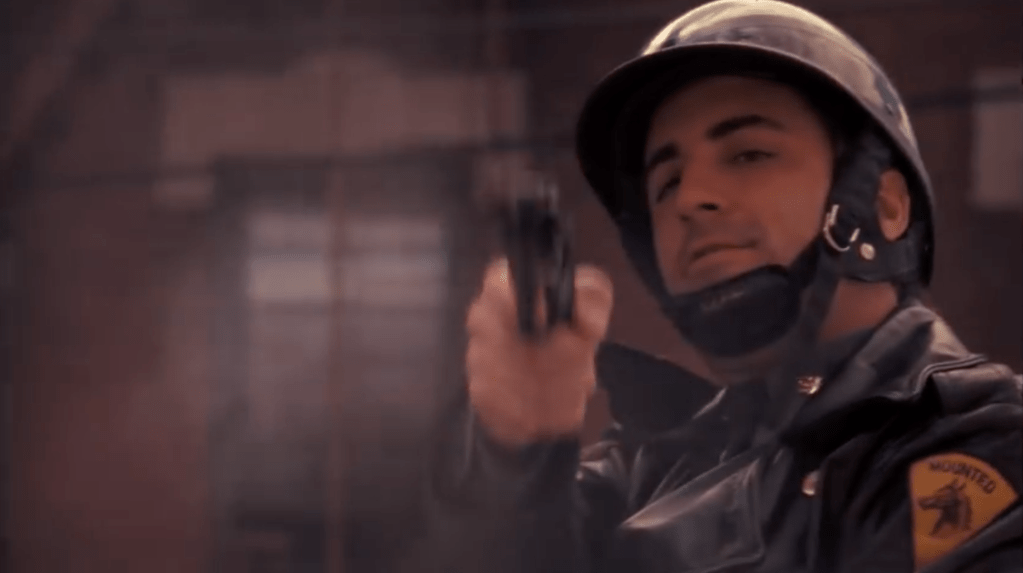
A few action scenes are handled quite well—Andy Garcia blowing out the brains of some hoodlums who have been sent to assassinate him, or his baroquely engineered slaying of Joe Montagna from horseback, dressed as an NYC cop. Both scenes look great, but neither makes any sense if you have the presence of mind to think for a millisecond about what is going on.
The only other highlight is Bridget Fonda—appearing mostly with Andy Garcia, as it happens—and the less said about Sofia Coppola, the void playing Al Pacino’s son, or even Pacino, the better.
Most of the location work looks like video of a House and Garden magazine shoot, and the denouement may, for all I know, appeal to opera lovers, but looks like it was accidentally intercut by a trainee editor who’d never seen a motion picture.
The Godfather Coda: The Death of Michael Corleone cannot eradicate these inexplicable choices, but this re-edit gives the narrative a modicum of coherence, even if it remains dull as ditchwater. Weirdly, the whole thing is prefaced by a straight-to-camera by Coppola that invites obvious satire along the lines of The Death of Francis Ford, but you just wish he’d made anything other than this movie.
My version would have killed off Michael Corleone early on—replacing the ridiculous pseudoseizure-flashback-stroke scene with a firefight—focused on Garcia’s and Fonda’s characters’ relationship, and explored the pitfalls of falling for a good-looking psychopath (perhaps ending with a heroin overdose)—but unfortunately no one asked me.
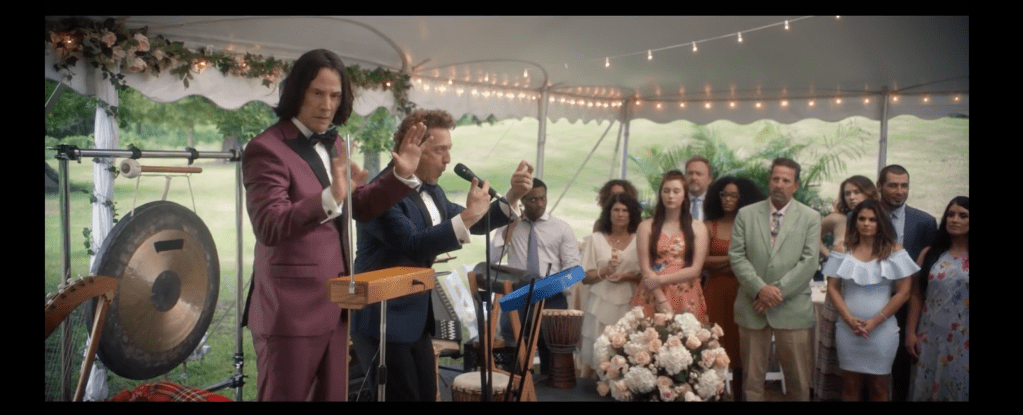
The Californian surfer/metalhead/stoner dude has a kind of intrinsic comic appeal, but has been deployed to better effect elsewhere—in virtually in every instance, actually—from Don’t Tell Mom the Babysitter’s Dead (1991) to Wayne’s World (1992) to Clueless (1995). Keanu Reeves is a pretty looking lightweight—kind of a tall Tom Cruise with no edge—but it’s expecting a lot of anyone in his 50s to convince as such a character, and in this he looks more like a waxwork than a real person, even if he has been dealt a dud hand, dialogue wise.
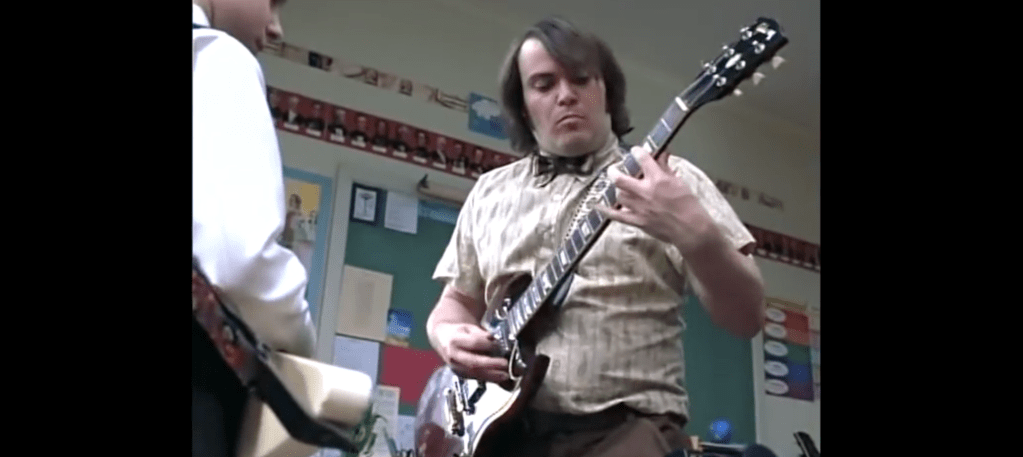
Rock ‘n’ roll as a medium to solve problems, or save the world, is a nice conceit—but it was done far better in School of Rock (2003)—a work of genius that uses Jack Black’s talents to optimal effect, and has the sense to include genuinely interesting music—whereas, bizarrely, Bill and Ted 3 features no songs at all, let alone original ones. Even more problematic, the creators forgot to include jokes—and, while the best moments may trigger the occasionally smirk, the writing seems churned-out, and there are no laughs as such—which is a bit of a bummer for a comedy.
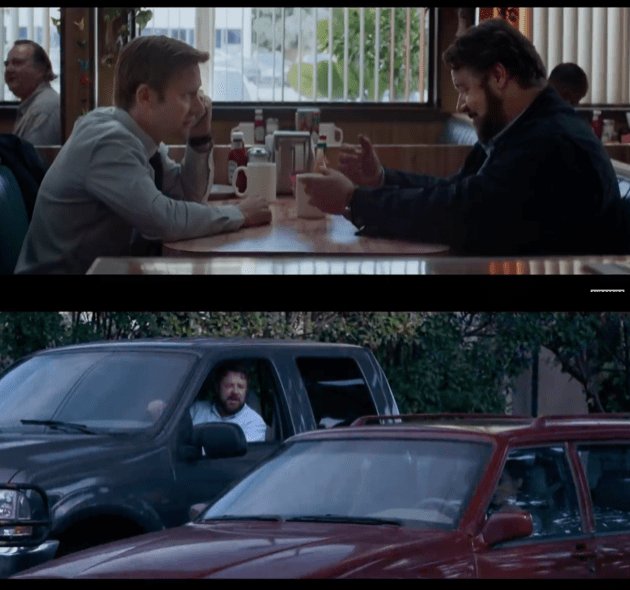
I’m sure we’ve all had occasion to engage in hand-to-hand combat on the highway, or resort to using our car as a weapon. But the writer of Unhinged has spent too much time surfing QuorTube, and concluded that road rage and serial killing are the same phenomenon.
The obvious calculation behind this production is that hybridizing the plot of [TV movie] Duel (1971) with elements of Psycho (1960), and intermixing pop psychology notions about road rage and texting at the wheel—and various other societal ills—is going to tap into the zeitgeist and strike box office gold, somewhat like the wildly overrated Fight Club (1999) apparently did for repressed masculinity.
But Fight Club seems like a work of genius compared with this garbage, and even Russell Crowe—as a kind of Stuntman Mike without style—cannot save it. It’s a straight action-suspense effort in which the screenwriter deploys at best cursory knowledge of how human animals behave in real-world situations.
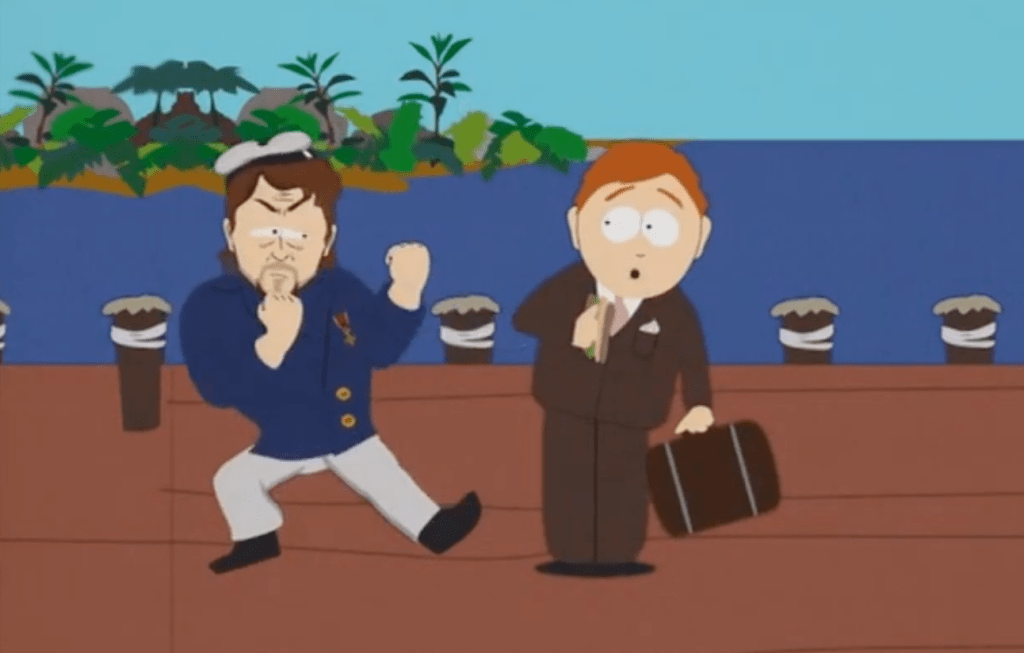
A glance at IMDb indicates that I have seen 10% of Crowe’s film output. He was brilliant in LA Confidential (1997), equally so playing introverted but relentless types in The Insider (1999) and American Gangster (2007), and perhaps also in any of the myriad ones I haven’t seen. He has amazing range. Maybe he viewed this project as a way to counter South Park‘s on-the-money critique of his personality flaws …but doing so by sending himself up by way of an artless thriller seems kind of weird.
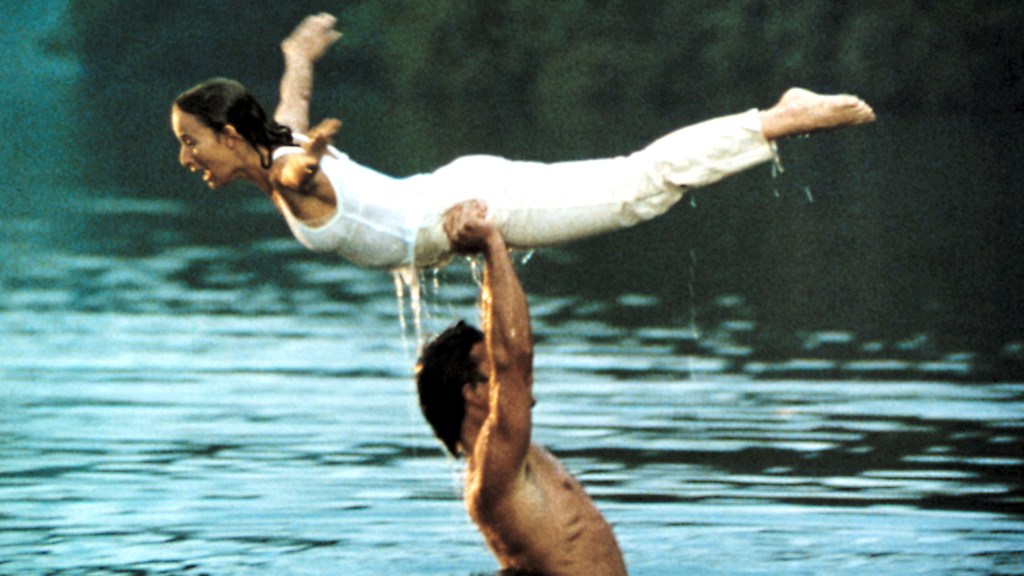
Somehow, I’d never seen this right through until tonight—but I’m glad I did, as it is a genuinely superb film. Sex sells—and there is nothing sexier to most men than women who can dance, dancing. But Dirty Dancing goes beyond that by conjuring many moments of emotional truth anyone can relate to—and it’s funny, which I would never have gotten from anything I’ve ever read or heard anyone say about it.
Some time ago, when I looked into it, I was astonished to learn that Jennifer Grey is the daughter of Joel Grey [riveting as the flamboyant Master of Ceremonies in Cabaret, 1972]. Her face, as she looks at Patrick Swayze, says everything that can be said about longing and frustration. Unfortunately, she didn’t much like her face, and, years later, did this to it:
Strangely, the one piece of casting that didn’t work for me was Swayze himself: it goes without saying his dancing is amazing, but he just cannot act convincingly when not doing the mambo.
Howard Hawks—director of To Have and Have Not (1944), The Big Sleep (1946) and Rio Bravo (1959), among many other iconic films—preferred to describe what he made as “entertainment,” rather than Art—and, of course, it was both—and in doing so recognized that entertainment is the art that reaches an audience. Which Dirty Dancing certainly did—and without compromising the Art.
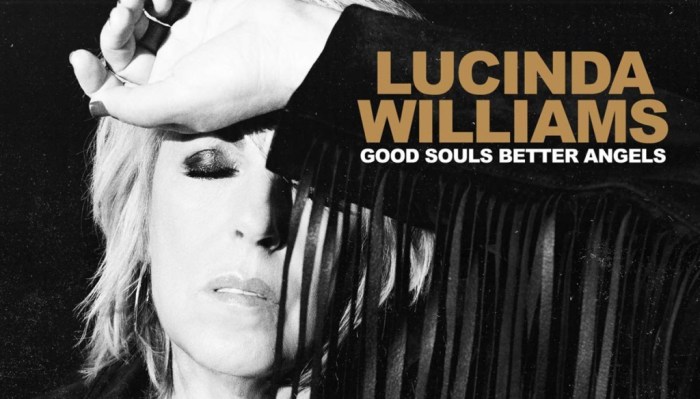
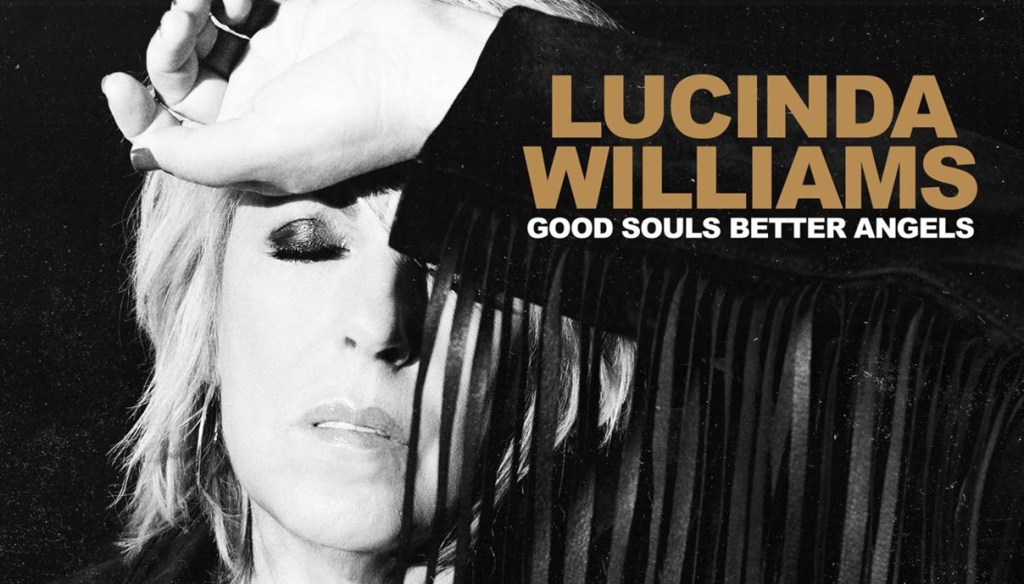
If I had to rank Lucinda Williams’s previous studio albums—and I suffer from a weird compulsion to do exactly that—then, depending on mood, I would place them in something like the following order:
On first listening, I would insert Good Souls Better Angels below West and Sweet Old World—whose songs are consistently superior, but which suffers from production that has always seemed to me incongruously bright and vapid—a problem corrected, of course, on its 2017 reboot, This Sweet Old World. Incongruously, because the world depicted is anything but sweet—but the ability to report back on lives shattered by disappointment and cruelty, and express the essence of those experiences vocally, is what makes Williams the brilliant singer-songwriter she is. On one occasion—at The Catalyst in Santa Cruz*—I got an immediate sense of her super-sensitive nature, when she noticed me drawing her from right in front of the stage and glowered just enough to make me lower my Bristol Board and pop my pen back in my mouth.
Emotionality is racked up to a 9 on Good Souls Better Angels, which has a somewhat stripped-down blues-rock sound that occasionally merges into an inchoate punk aesthetic (such as on Wakin’ Up), and takes us surprisingly far from the unique Country Rock sensibility of Car Wheels—even ifLittle Honey is also essentially a rock album, replete with psychedelic touches, and the electrifying pop rock of Little Rock Star [which happens to be about Pete Doherty, and the false allure of fame].
You know that Man Without a Soul is going to be about Donald Trump before the first words are sung—before the overdrive-heavy intro, even—and, while it’s a little on the nose for my tastes, it’s nevertheless far from artless, and lyrically she still runs rings around most songwriters. The line “I don’t wanna be no special rider” might have formed a more poetic basis for a title than Big Black Train, but the song has a genuinely beautiful melody; while Pray the Devil Back to Hell is introduced by a gypsy jazz violin that lightens the overwrought tone. Bad News Blues seems like a rewriting of Dylan’s Everything Is Broken after downing a pint of bourbon—and opening track You Can’t Rule Me is everything you wanted to say on a first date had you known what was coming after the hangover lifted.
*https://www.youtube.com/watch?v=wa0Wajk8vF0 [Not my video]


 FATAL VISIONS