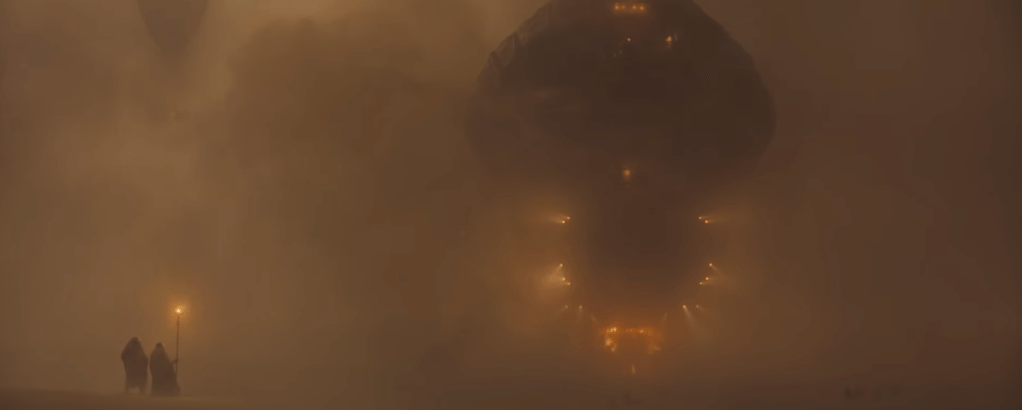
I got through almost 90 minutes of this before realizing it was more important to get on with the rest of my life—particularly since, if you want to do a tour of the British Museum on sedatives, you don’t need to spend $165 million.
Canadian—“French Canadian,” as IMDb dutifully points out—director Denis Villeneuve does another in his series that answers a question no one asked: How would Ridley Scott have shot this? Neither did I make it through the last ditchwater-dull iteration, Blade Runner 2049 (2017).
The reason, of course, is that you can’t stare at a screen for 2h 35min and remain interested unless there is also interesting dialogue, characters, and acting, of which this has none. It suffers from the same general problem all Cecil B DeMille movies show—portentous, self-important dialogue that bears no relation to the way people actually speak. The anesthesia induction palm itself off as the introduction to a movie contains not a single line of realistic dialogue—and there is no way of relating to the various assembled practitioners of feudal etiquette or escrima.
As you might expect, the space hardware is okay, in a familiar, XBox One sort of way—if you don’t mind the occasional steal from 2001: A Space Odyssey and Star Wars—and its ornithopters look persuasively flyable, in a Desert Storm sort of way… but you can’t be expected to watch a movie on that basis, any more than spend three hours in a Toyota showroom.
Like most science-fiction, it appeals more to the intellect than the heart—and there are just not enough ideas at play to make it interesting.
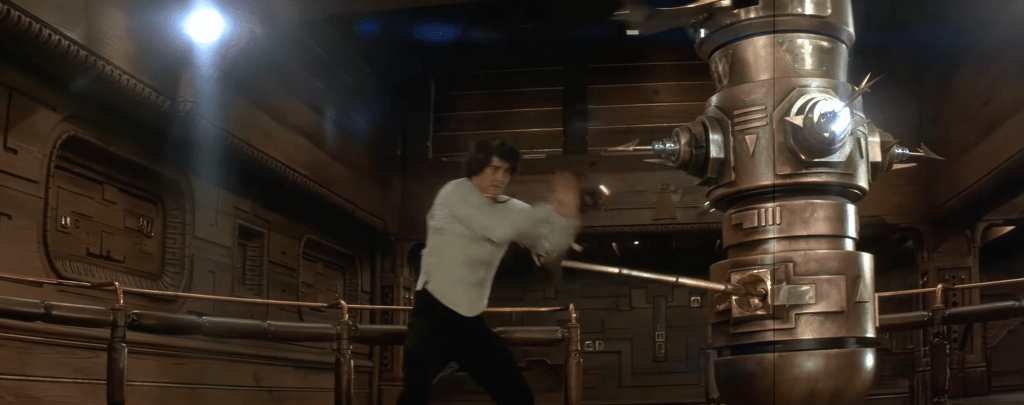
By contrast, David Lynch’s baroque, incoherent, and at times disgusting 1984 version had the great merit of seeming genuinely alien.

 FATAL VISIONS