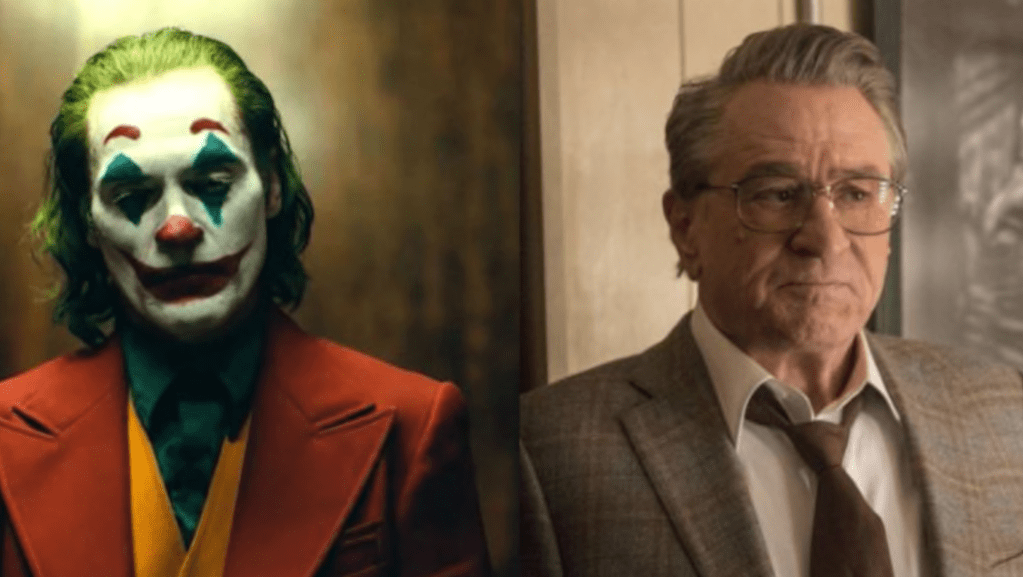
Aiming for an entirely naturalistic account of a DC Comics character with such a flamboyantly burlesque aspect is a bold move, but a weirdly mirthless and tasteless quality pervades Joker, wherein the titular antihero’s proclivity for incongruous laughter is explained by a neurological condition, and the only scene played for laughs does so at the expense of a dwarf. Although I’ve never previously felt the absence of Batman in a movie, here it is glaring, as there is no object for the protagonist’s angst other than the abstract hate symbol of Corporate America (briefly embodied by some boorish WASP stockbrokers)—and, as drama, it defeats its own purpose.
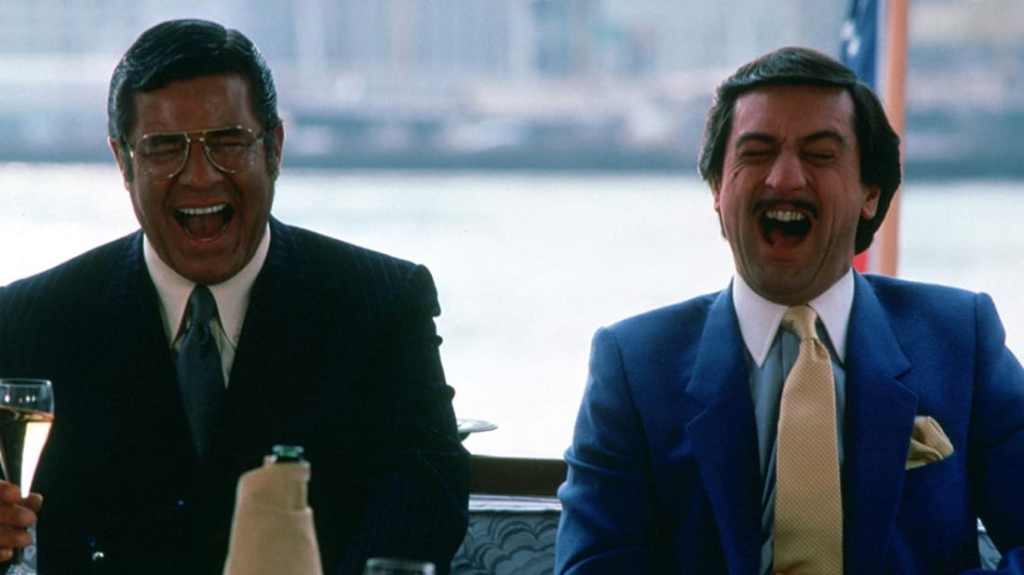
Perhaps this flaw might have been offset by the presence of an actor more charismatic than Joaquin Phoenix—his interpretation has nothing on Jack Nicholson’s, or Cesar Romero’s—or a less vainglorious piece of casting than that of Robert De Niro, whose iconic performances in The King of Comedy (1982) and Taxi Driver (1976) are heavily referenced, and for no obvious entertainment based reason. Even The Deer Hunter (1978) gets a nod—by way of a TV ad for the beer, Rolling Rock, it made famous.
Over the years I’ve had two girlfriends who thought Robert De Niro’s name was actually Danny DeVito—and I totally get that his outstanding skills as a character actor are not everyone’s cup of tea. Moreover, for all his brilliance at embodying determination, courage, and macho values, he has never convinced as someone who could provoke a smile that was other than nervous. When matched against genuinely funny actors like Charles Grodin or Bill Murray, De Niro has been acted out of the park—and here he only deepens the depressing tone. Beyond a certain age, all actors lose their screen presence, if it has depended to any degree on good looks—even including Brando, by the time of The Score (2001)—and De Niro, here looking like your embarrassing, overweight uncle, is no exception.
The cinematography, and production values generally, are superlative, as you would expect in a Hollywood production—even one with a below-average budget of $55 million—but this cannot save it from having no plot. This Joker’s various social and mental state issues—which also include literacy problems—combine with the screenwriters’ thinly-veiled critique of healthcare provision in NYC-Gotham City to suggest that they are in fact frustrated social workers, and the whole thing is about as entertaining as a three-month-long elective in the outpatient clinic of your local hospital. As Sam Goldwyn sagely remarked, if you have a message, go to Western Union.

 FATAL VISIONS