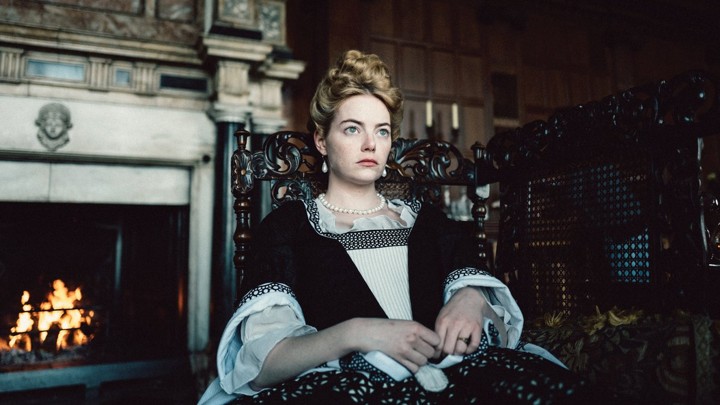
I am familiar with Olivia Colman mostly through Peep Show. She is, I think, naturally funny — and, with the right material, such as here, even more so. Rachel Weisz, in contrast, does no more than fill her role. Neither of them looks other than extremely plain but, fortunately, Emma Stone, the third point in the story’s lesbian love triangle, does not. This big-eyed actress is deceptively versatile, possesses a flair for comedy (also showcased in Battle of the Sexes), and is capable of a flawless English accent — much like Nicholas Hoult, who leads the charge from the men. The narrative ultimately runs out of steam, but captures something of the scheming and capriciousness characteristic of social systems at any level. The script plays comedy and drama quite closely, and is occasionally laugh-out-loud funny. It owes a significant amount to Alan Bennett, and also, maybe, Kurt Vonnegut Jr., who, if he had written screenplays, might have created a similar tone.
I suspect that only cineastes will care about this aspect of the production, but the cinematography is a nightmare: scenes are often shot partly in extreme wide-angle — as though the director was afraid not to get in the full splendor of the historical locations (Hatfield House and Hampton Court Palace, the Google says) — or shot from hip- or even ankle-level, creating an unnecessarily off-kilter visual feel that I presume was intended to heighten the comedy. It does not work. The makers would have benefitted from aping the look of Kubrick’s Barry Lyndon and, in doing so, would not have detracted from the film’s considerable strengths.

 FATAL VISIONS